
Early Stage 1 HSIE Unit 4 | NSW 2024 Syllabus | Moving Through Time: Transport Past and Present
Early Stage 1 HSIE Unit 4 | NSW 2024 Syllabus | Moving Through Time: Transport Past and Present
Early Stage 1 HSIE Unit 4 | NSW 2024 Syllabus | Moving Through Time: Transport Past and Present
$25.00
You won't be charged yet
Description
Early Stage 1 HSIE Unit 4 | NSW 2024 Syllabus | Moving Through Time: Transport Past & Present.
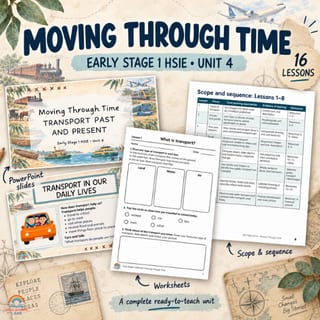
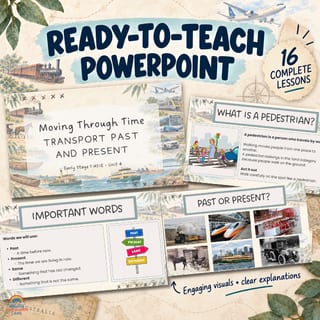
Make Early Stage 1 HSIE planning simple with this complete Kindergarten transport unit, designed to support the NSW HSIE K–6 Syllabus 2024. Moving Through Time: Transport Past and Present includes 16 ready-to-teach lessons, an engaging PowerPoint presentation, printable student worksheets and a comprehensive teacher planning companion.
Across the unit, Kindergarten students investigate how transport is used, compare transport from the past and present, and explore how transport has changed over time. Students classify land, water and air transport, identify how transport moves people and goods, sequence historical images and select suitable transport for different places and purposes.
The unit also includes respectful learning about Aboriginal Peoples’ use of bark canoes and Torres Strait Islander Peoples’ use of dugout canoes.
NSW syllabus alignment
This Early Stage 1 HSIE resource supports the following NSW syllabus outcomes:
- HSE-ACH-01: Identifies ways that Aboriginal Peoples connect with Country, Culture and Community.
- HSE-HIS-01: Identifies information about daily life and transport in the past, using stories, images and objects.
What is included?
- 16 complete HSIE lessons
- 350+ ready-to-teach PowerPoint slides
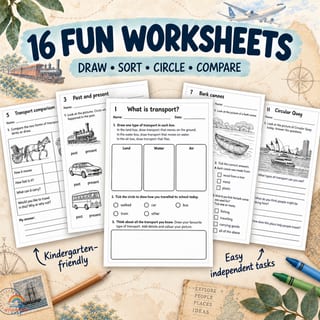
- 16 printable Kindergarten worksheets
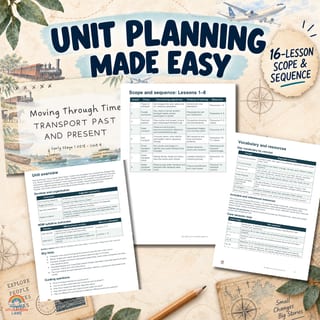
- Unit overview and suggested organisation
- Detailed 16-lesson scope and sequence
- Lesson overview and outcome mapping
- Learning intentions and success criteria
- Assessment guidance and evidence suggestions
- Differentiation and extension ideas
- Key vocabulary organised by concept
- Teacher preparation checklist
- Referenced videos, websites and supporting resources
Topics covered
Students explore:
- What transport is and why it is used
- Land, water and air transport
- Transport that moves people and goods
- Transport from the past and present
- Changes to road and rail transport
- Public transport over time
- Present and past water transport
- Aboriginal Peoples’ bark canoes
- Torres Strait Islander Peoples’ dugout canoes
- Transport at Circular Quay
- Changes to air transport
- Selecting suitable transport
- Comparing steam trains and modern metro trains
Engaging, age-appropriate learning
The lessons have been designed specifically for Kindergarten and Early Stage 1 students. Activities include:
- Drawing and colouring
- Sorting and classifying
- Matching and sequencing
- Movement-based response activities
- Turn-and-talk discussions
- Examining historical photographs
- Comparing past and present transport
- Completing simple sentences
- Creating a transport class book
- Constructing and presenting a transport model
The worksheets use clear instructions, large drawing spaces and simple questions suitable for students in Early Stage 1.
Save valuable planning time
This comprehensive Early Stage 1 HSIE transport unit provides the lesson content, teaching slides, worksheets, assessment guidance and planning documentation needed to teach an engaging 16-lesson sequence. Simply download, prepare the listed resources and begin teaching.
The PowerPoint presentation contains clickable links to selected videos and supporting websites. Teachers should preview external content before teaching, as third-party links may change over time.
Perfect for NSW Kindergarten teachers, Early Stage 1 classrooms, homeschool settings, casual teachers and educators looking for a complete transport past and present unit aligned with the new NSW HSIE syllabus.
Please note: This is an independently created teaching resource designed to support the NSW HSIE K–6 Syllabus 2024. It is not an official NSW Department of Education or NESA publication and is not endorsed by either organisation.
Description
Early Stage 1 HSIE Unit 4 | NSW 2024 Syllabus | Moving Through Time: Transport Past & Present.
Make Early Stage 1 HSIE planning simple with this complete Kindergarten transport unit, designed to support the NSW HSIE K–6 Syllabus 2024. Moving Through Time: Transport Past and Present includes 16 ready-to-teach lessons, an engaging PowerPoint presentation, printable student worksheets and a comprehensive teacher planning companion.
Across the unit, Kindergarten students investigate how transport is used, compare transport from the past and present, and explore how transport has changed over time. Students classify land, water and air transport, identify how transport moves people and goods, sequence historical images and select suitable transport for different places and purposes.
The unit also includes respectful learning about Aboriginal Peoples’ use of bark canoes and Torres Strait Islander Peoples’ use of dugout canoes.
NSW syllabus alignment
This Early Stage 1 HSIE resource supports the following NSW syllabus outcomes:
- HSE-ACH-01: Identifies ways that Aboriginal Peoples connect with Country, Culture and Community.
- HSE-HIS-01: Identifies information about daily life and transport in the past, using stories, images and objects.
What is included?
- 16 complete HSIE lessons
- 350+ ready-to-teach PowerPoint slides
- 16 printable Kindergarten worksheets
- Unit overview and suggested organisation
- Detailed 16-lesson scope and sequence
- Lesson overview and outcome mapping
- Learning intentions and success criteria
- Assessment guidance and evidence suggestions
- Differentiation and extension ideas
- Key vocabulary organised by concept
- Teacher preparation checklist
- Referenced videos, websites and supporting resources
Topics covered
Students explore:
- What transport is and why it is used
- Land, water and air transport
- Transport that moves people and goods
- Transport from the past and present
- Changes to road and rail transport
- Public transport over time
- Present and past water transport
- Aboriginal Peoples’ bark canoes
- Torres Strait Islander Peoples’ dugout canoes
- Transport at Circular Quay
- Changes to air transport
- Selecting suitable transport
- Comparing steam trains and modern metro trains
Engaging, age-appropriate learning
The lessons have been designed specifically for Kindergarten and Early Stage 1 students. Activities include:
- Drawing and colouring
- Sorting and classifying
- Matching and sequencing
- Movement-based response activities
- Turn-and-talk discussions
- Examining historical photographs
- Comparing past and present transport
- Completing simple sentences
- Creating a transport class book
- Constructing and presenting a transport model
The worksheets use clear instructions, large drawing spaces and simple questions suitable for students in Early Stage 1.
Save valuable planning time
This comprehensive Early Stage 1 HSIE transport unit provides the lesson content, teaching slides, worksheets, assessment guidance and planning documentation needed to teach an engaging 16-lesson sequence. Simply download, prepare the listed resources and begin teaching.
The PowerPoint presentation contains clickable links to selected videos and supporting websites. Teachers should preview external content before teaching, as third-party links may change over time.
Perfect for NSW Kindergarten teachers, Early Stage 1 classrooms, homeschool settings, casual teachers and educators looking for a complete transport past and present unit aligned with the new NSW HSIE syllabus.
Please note: This is an independently created teaching resource designed to support the NSW HSIE K–6 Syllabus 2024. It is not an official NSW Department of Education or NESA publication and is not endorsed by either organisation.